Tuesday, September 03, 2013

While I'm at it...

To complete the picture that I began in the Letter to a Medical Professional post last year, I decided to find the other complaint letters I wrote to CPFT during that period.

Ironically, I come across as very articulate and "together" in the letters. In reality, I was a bit of a mess and I'm not sure that sending articulate letters was helpful in getting CPFT to understand how desperately I needed help. Their response to each letter was to arrange meetings and at least, I suppose, they got to see the anxious, weeping mess of a person in my presence in those meetings.

I had a brief moment of concern about whether I should include the names of the medical professionals in this post or edit it. But in the end, my voice (my writing) is all I have and it's not as though my blog is one with a massive following. I have compromised by leaving only the initials of surnames.

Anyway, here is letter 1, which was dated 8th November 2009.

"Dr Tom D,
Medical Director,
Cambridge and Peterborough NHS Foundation Trust,

Dear Dr D,

I write to share my concerns about the poor standard of treatment that I have been offered by various teams within Cambridge and Peterborough NHS Foundation Trust, after receiving many years of excellent care from Birmingham and Solihull Mental Health NHS Foundation Trust. The consultant psychiatrist in the BSMHT Eating Disorders service referred me to your Eating Disorder Service in August 2007 so that I could access regular support in Cambridgeshire, where I now live.

I was not offered an appointment until late October 2007. This assessment was conducted by a clinical psychologist and I was then paired with a counsellor (Gillian T, who has a PhD in psychology but not a clinical psychology doctorate*) for 12 sessions of Cognitive Analytical Therapy. My meetings with Gillian took place from January until August 2008; at one stage, she referred to me as ‘an anorexic with no hope of getting better’. At several points during our meetings, I asked Gillian whether I could access additional support. My specific requests were to see the consultant psychiatrist to have a review and discuss my medication, and to see a dietitian. I was told that these services were not available to me. In addition, Gillian explained that treatment was only available in discrete units so after my 12 sessions I was discharged from the service.

From August 2008 until August 2009, I was supported by my GP. However it has become increasingly clear that I need further treatment and so a referral was made to the community psychiatry team. This resulted in an appointment with Dr Nikolett K, staff grade to Dr Claire D, on 7th October. Dr K was extremely helpful and indicated that she would see me monthly, and that she would liaise with the Eating Disorder service to see whether anything could be arranged with them. She asked me to register with the University Counselling Service so that I could have regular support in the interim. I did this on 9th October and was contacted, via email, by Lisa H, senior counsellor for the service, who asked my permission to speak to Dr K, which I gave. Once Ms H had conversed with Dr K, she emailed to ask me to meet her in person. In this meeting, she explained that the UCS could not give me counselling but that Dr K would be speaking to the Eating Disorder service to ensure that I would get the specialist help that I need. I enclose a copy of this letter for your reference.

I was encouraged by these developments but this turned to disappointment when I rang Dr D’s secretary to ask why I had not received a letter for my next appointment. The secretary told me that Dr had left the service. Instead I was offered an appointment with a locum, Dr O, on Friday 6th November. I attended this appointment and it was a very unsatisfactory experience. It appeared that Dr O had not read my notes before meeting me; at one stage he asked how old I was, which either indicates a failure to read basic details or that he believes me to be insufficiently compus mentis to retain such information. I was forced to reiterate all the treatment history and aetiology of my illness that I had discussed so productively with Dr K. In contrast, Dr O appeared to be taking me through the standard lists of diagnostic questioning without tailoring it to my specific circumstances. Like Lisa H, he was labouring under the misapprehension that I had discharged myself from the Eating Disorder service; I was, in fact, told by Gillian T in August 2008 that treatment was offered in discrete units and that my unit had come to an end. Once he learned that I am happy to re-engage with the ED team, he said that he would write a referral letter. Disappointingly, the contact with the ED team that Lisa H believed Dr K would make seems not to have happened and a letter from a community dietitian, which delineates my current difficulties and that I entrusted to Dr K, has been lost. Furthermore, while Dr K had indicated that I could remain a patient of the community team while receiving specialist Eating Disorder treatment, Dr O told me that his remit with me would be over once he had referred me.


All of these circumstances have combined to leave me with very little confidence that I will receive any help from your Trust. I have previously defended the NHS to friends based on the exceedingly good treatment available during my time under the care of Dr R in Birmingham; now though I feel very let down by the services on offer to me and wish to make sure that this catalogue of problems comes to the notice of senior figures within CPFT. I hope that my bad experiences may, at least, contribute to improvements in the consistency of care that you offer to vulnerable people with eating disorders and other mental health difficulties."

On Twitter the other day, I entered into a discussion with some medical professionals over whether notes should be read prior to appointments. My answer is: yes, always. And the experience with Dr O. goes a little way to explain why. The follow-up letter after my next outpatient appointment at the same clinic goes even further!

*reading this back, I can see that this may seem a bit intellectually snobbish of me! But my point is/was that one can obtain a PhD in psychology through research; it does not entail the same level of intensive clinical practice as the clinical psychology doctorates. 

Friday, August 30, 2013

Inversely related?

I wonder whether my need to "talk" online in inversely related to the amount of talking I'm doing offline. Certainly, over the past few days, with no voice beyond a painful croak, I've spent long periods of time reading (discovering new blogs and tweeters that I haven't "met" before) and writing in response to their posts.

Actually, it would be more true to say that the reading has made me do a lot of thinking. And since I can't talk, my thoughts are constructing themselves in the form of written responses. It occurred to me this morning that I may as well seize the moment and put some of these thoughts on the blog.

Yesterday's reading started with seeing a tweet from Another Mum that linked to the blog of another mother of a teenager with an ED. I read. And read. And read some linked blogs. And read some suggestions that emerged after I commented on one post.

It isn't possible to write a single blog post that covers all the scattered thoughts I've been having since. But essentially, I learned a lot about Family-based Treatment (FBT), the Maudsley model and the way that many parents of children/teenagers with EDs now support them through the process of recovering... and unsurprisingly this raised, for me, all sorts of memories and questions about how my family were treated when I first became ill.

A year before I became ill.


 I stopped eating, aged 10. It was deliberate. But it took me years to admit it was deliberate. At the time, I said that I couldn't swallow. I was admitted to the general children's ward of a local hospital at the point at which I could no longer walk. The eventual diagnosis I was given was ME, after 6 months in hospital, plenty of Fortisips and Fresubins, physiotherapy and not much else, I started walking again. I was discharged from hospital. And that was that.

I've never really accepted the ME diagnosis, except insofar as my decline began about 6 months before I was admitted to hospital when I picked up an ear infection. At the time, the ME advocacy community (I joined Action for ME and another group) were very adamant that no psychological element existed within ME... and I knew that my problems were primarily to do with my sadness and anxiety. I'd become unhappy at school since a house move and not eating (and then not walking) met my needs: I didn't have to go to school because I was poorly so I didn't have to see the girls who were unkind to me or the teachers who expected my emotional maturity to meet intellectual ability.

It's clear, with hindsight, that the team of professionals at the hospital weren't sure what was going on. I was under a paediatrician and paediatric psychiatrist. But I didn't see the psychiatrist very often. She spoke to my parents a few times and told them how she thought they should be bringing me up, for example stating that unless they paid to send me to an independent girls' school, I'd be unable to leave the hospital school because I was unsuited to a state secondary school.

It also feels as though there was some awareness of anorexia among the team. One doctor proposed putting me in a side room, under a regime that was the currently-accepted treatment programme for anorexia (i.e. bare room until you gain a kilo, then you perhaps get access to a tv for an hour a day). Luckily for me, this didn't happen. A month after I was admitted to the general ward, a bed became available at the psych ward in the local children's hospital. My parents and I together decided that the move wouldn't be sensible at that point because I was settled on Ward 20 at EBH. Perhaps this was our mistake. Perhaps if I'd gone there, my refusal to eat would have been addressed differently. Perhaps if I'd gone there, I'd have had follow-up after discharge and the eating disorder wouldn't have been allowed to fester in secret for nearly a decade. But "what ifs" are something that I try to avoid, even though I think I allow myself incredulity that the medical professionals did no follow-up at all after a 6-month stay in hospital for a serious, if somewhat confusing, illness.

However, the main result of my reading yesterday was a small glimmer of realisation that the experience of spending 6 months in hospital aged 11 and 1 week, even with regular parental visits, is major. Some parents in the ED advocacy world describe such IP admissions as a "parentectomy"... and that term transported me, in all its painful rawness, to the first night I spent alone on Ward 20. I was told off for being selfish when I cried for my mum. It taught me that I shouldn't need people or be dependent. Rationally, I understand that this is a bizarre belief for an 11-year old to internalise. When a child is in primary school, she is allowed to want her mum or dad. She isn't a grown up.

I was struck on these blogs at how involved the families are in their daughter or son's treatment. And it made me wonder whether that "parentectomy" is one of the reasons why the notion of having family involved in treatment seems so alien to me. In my experiences of adult IP treatment, even as a teenager, parents coming "too often" or being "too close" wasn't just frowned upon but was written down as an observation in the notes as evidence of potential inappropriate relationships. I know this because I've read those nursing notes and been shocked and angered at how judgemental the phraseology is.

It feels as though the concrete has set in my case. We have 24 years now of my ED being my own demesne, private to me. Neither my parents nor I would know how to cope with the FBT model.

But I'm glad it's there. And I hope beyond hope that time will prove that it can prevent EDs from being as longterm as they have been for many people of my own generation.

Thursday, August 29, 2013

site traffic

This amused me.


The search terms that have resulted in hits to this blog.

And the leaves that are green...

I put a link to a post from May last year on Twitter yesterday and now feel embarrassed that the latest entry is 3 months old.
Sending that link reminded me that I needed to reply to an email from Beat. Their media volunteer co-ordinator had emailed me after I filled in the survey about disparities in care while at university. She asked for a paragraph to describe my experiences. Even when I tried to split it into two single paragraphs (each relating to one of the two occasions when I was referred from BSHMFT to CPFT), my response was a "loose, baggy monster" of an email.
But I don't know that I could condense any further since both of those periods under the "care" of CPFT were loose, baggy monsters of failures.
I don't think I've talked much on here about the first referral, back when I went up for undergrad in 2001. At that time, there wasn't an adult eating disorder service in Cambridge. So I went to the "low weight clinic" of a consultant who specialised in personality disorders, Dr Jonathan Dowson. His advice to me during the 18 months I spent on his service included buying full fat milk so I'd put weight on ("if there's no room in the shared college fridge, put it on your windowsill overnight or buy a new one each day"). He also wondered aloud why I couldn't just get better because "you're an intelligent girl".
By the end of 2002, I knew I needed better help than this and managed to get re-referred to Birmingham. On that occasion, flexibility meant that I didn't have to give up university: the Cambridge GP, Birmingham GP and BSMHFT came up with a compromise whereby I could be a long-term "temporary resident" at the Cambridge GP, maintaining my registration in Bham... and therefore my eligibility to be seen by the ED team up here. In a pre-echo of the events of 2010, this arrangement turned out to be crucial because when I finished my Part I exams in June 2003, I was very unwell. It was lucky that everything was in place for me to be seen immediately when I returned home because I needed to go into hospital.
I've no idea what would have happened if I'd still been reliant on the "low weight clinic" at Addenbrookes. Maybe advice to add cream to my full-fat milk?!


Talking about the past is incredibly easy in comparison to talking about the present. The title I chose for this post immediately came into my head and it's not hard to analyse why. It's the end of August, the holidays are ending and, as Simon and Garfunkel sing, "the leaves that are green turn to brown". But I suppose it's also symbolic of my emotions at the moment.
I have had a pretty rough few months with my physical health. No one can say definitively how much it is related to my ED.
Yet sitting here, exhausted after coughing all night, with no voice to speak (let alone to sing), I'm caught in a disparity between believing that this is a time for newness (a new term for ballet! could I find a job or a new evening class? should I plan to move out? what part should I audition for in the new show?) and feeling that my body will not let me do any of that.
I am aware of the paradox: the desire to punish my body for failing me will only make it fail me more. And I am also aware that my "insight", much praised by doctors and other MH professionals over the years, doesn't always translate into the necessary action.

Wednesday, May 08, 2013

That word

I've known today that I need to write, to offload. But sharing things with friends on Facebook or even with contacts on Twitter feels wrong here. Because noone who has or has had an ED needs to read of the problems faced by others. Even those people in recovery can falter when reading of specific difficulties with food or weight or shape.

But all these thoughts in my head need to go somewhere.

There's a word that is familiar to many people with EDs and the medical professionals that look after them: struggling. Its meaning is hazy, some kind of shorthand to describe any state of being that lies between very poorly and very well. Countless conversations unfold:
Me: Hi Frederica, how are you doing?
Frederica: Struggling a bit. But ok, really. How about you?
Me: Oh I'm ok. I've heard Iphigenia is really struggling. Not sure whether she might be heading into daycare.

To me, struggling has always referred to that place, the one that seems unending and infinite, where the anorexic thoughts are there, 24 hours a day. But so are the pressures to try to "do well", to maintain weight, to keep out of hospital. Struggling is where many people think you are ok because you eat (even if that eating is not "normal" in terms of choices or portion sizes) and your weight is relatively stable but where every day is an effort, every item that you put in your mouth represents an internal battle, where hope of change, of things getting better seems a long way away.

This week, it's redefined. I am struggling in a new way. The other health problems are scaring me and draining me. The asthma (or whatever it is) is not in control. It scares me and I suppose that my old instinct of finding control elsewhere becomes stronger. Furthermore, two emergency hospital admissions have messed up my routines and challenged my belief that I need to eat (after all, if I managed without food there for x hours, skipped most of the elements of my diet without it affecting me, why do I need to restart). Plus the physical symptoms (persistent cough, breathlessness, fatigue) are genuinely making it hard to get through a meal. I feel full after a few mouthfuls and have every reason to give up. Anorexia screams at me to just throw it away, to "win" by having a very real reason not to eat.

But logical brain, friends, family are saying the opposite: I can't hope to get over this if my body hasn't enough fuel to fight it.

Today, all this conflict feels too much. I don't know how to cope with it. I haven't the strength to do anything that I love : I can't dance; I can't sing; I am too exhausted even to write. My Sky+ box is almost full of tv programmes that I can't be bothered to watch.

My one glimmer of hope is that my semi-regular appt with my ED consultant is on Monday. It's only a glimmer because he's supposed to be in the process of transferring me to local services (on the weird basis that I'd been the same level of not better enough for about a year - whereas one would expect discharge to follow improvements). And either he will think that I'm "struggling" in an effort, whether conscious or unconscious, to avoid being discharged. Or he won't even want to talk about the current situation and the panic/distress of being transferred while I'm feeling this low will just make everything worse.

I'm seeing my therapist straight after. So another glimmer of hope.

Is it ok to say I'm struggling? that I'm not ok?

Tuesday, April 23, 2013

Too late to make sense

I had a blog post planned out in my head earlier today. But now it is late and I'm post-medication plus tired from all the coughing (body has decided to develop another chest infection).
However, I just read a post from a blog I've not previously read. I'm going to link to it because it's a thought-provoking read on the contradictions inherent in struggling with an ED while attempting to live by feminist ideals: ED, me and feminism 
That's just one of the many contradictions that become part of life with an ED. From the elderly consultant psychiatrist who told me I was too intelligent to be anorexic: "you are clever enough to know that you have to eat" to the current confusion in my own head as I hate my body for this damned cough and for not being well enough to do the things I love ... while simultaneously knowing and rejecting that physical healing and recovery are hindered by poor diet.
And the thoughts I'd had about blogging earlier surrounded the way that this stage, the stage that Ilona described so eloquently in the Independent, feels so much worse than either letting the illness win or than being better. Because every choice is a failure in some respect. If I have a scoop of frozen yoghurt, one side of my brain is telling me that I'm a greedy failure, a lazy pig for eating; the other side wants me to be guilty for not trying enough, for not being better enough, for letting down the community of people online who are working for recovery. And this same dichotomised mixture of self-critical, self-loathing feelings occurs with every stage of the day from waking up to now, at midnight, when I struggle to find anything positive about my actions today. I'm failing at being anorexic; I'm failing at recovery. Rational brain knows that this is perfectionist thinking and that most people would say that maintaining a pattern of eating and no dramatic weight loss is fine. In fact, this is the party line from the MH professionals ... because if you are classified SEED, they believe that this is as good as it gets.
But to be honest, that doesn't make it feel any better. Trying to imagine this state of conflict being the best I can hope for and, therefore, the way that I will spend the rest of my life is pretty desolate, which can lead to some very desolate thoughts.
It sounds stupid but this is where my dogs are so important. Even when my life feels pointless, I know that the dogs need me. I'm the only human that Midgy will trust and she is happiest when she's close to me. It may be a stupid reason to keep on fighting through this. But it is a reason and I'm keeping on fighting.

Saturday, March 02, 2013

Inverse


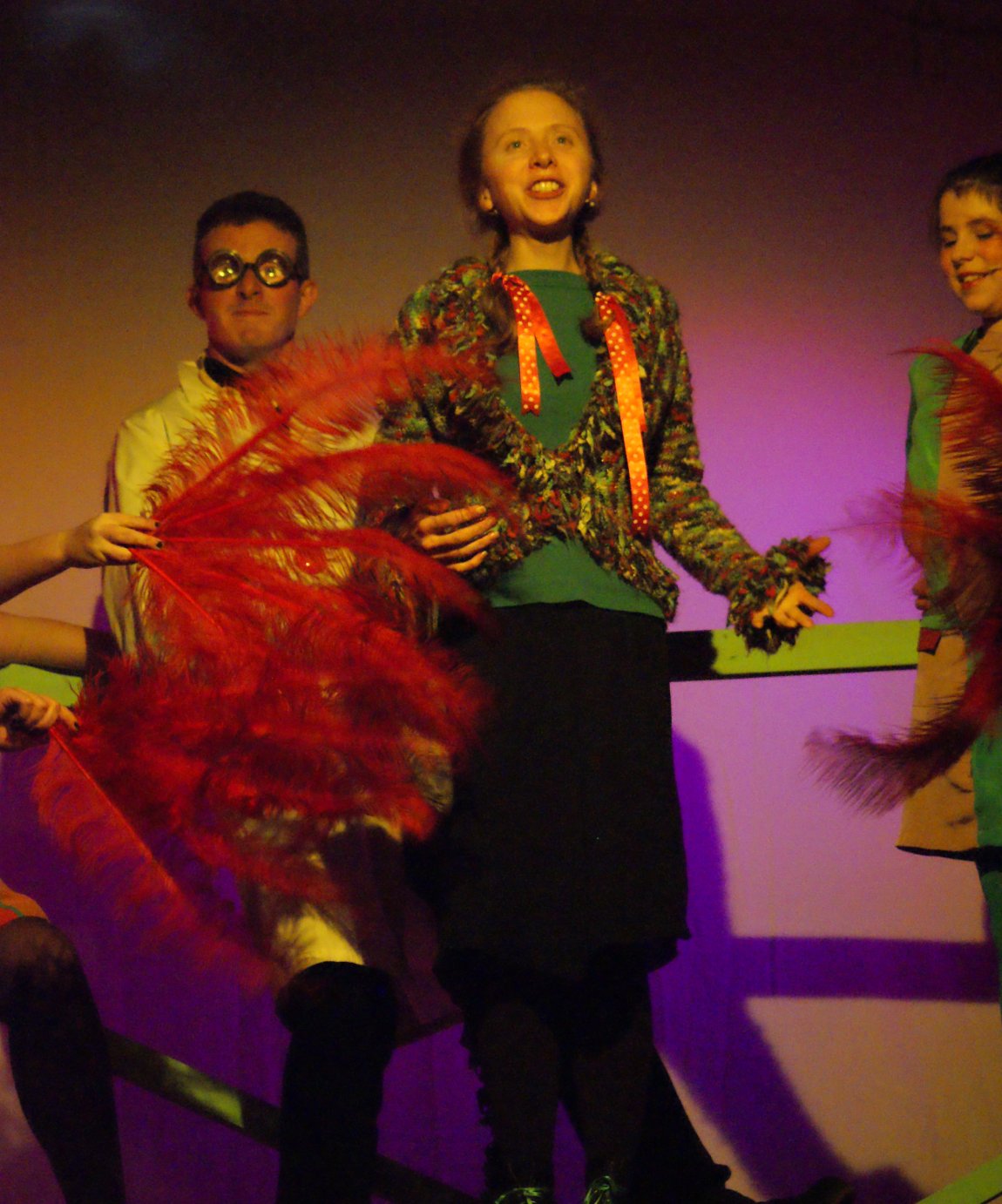
Last year, I went to a pamper evening held for a friend before her wedding. She is such a close friend that I armed myself with anxiety medication and went along, although being in a group that included people I don’t know, I barely said a word all evening. After a couple of hours, I was sitting next to one lady and the conversation turned to Seussical, the show that my friend had recently directed and in which I had played a lead role. The lady said she had been to see it and asked what part I’d played. When I told her, she expressed total shock, essentially asking how someone as quiet as me could have such a big stage persona.
This disconnect between my love of performing and my paralysing social and general anxiety, which prevents me from socialising and from going into a busy shopping centre, has been on my mind recently.
Tomorrow, I have to have my photo taken for publicity. My drama group are performing Guys and Dolls from 20-23rd March and, as one of the lead 4 actors, I will be photographed in costume with the others to try to increase ticket sales. 
This has worried me ever since I heard about it. I think I’m concerned that people will see the photo and think “LB is clearly lying about the extent of her depression and anxiety if she can perform in a show”. Trouble is that nothing is every as simple as that.
It’s hard to explain how I’d much rather sing a song or act a scene in front of people than to speak to them. The worst part of rehearsals, for me, are the coffee breaks. If I need to talk to someone, I’d much rather email them than face speaking in person. But, when I’m pretending to be Sarah Brown or Miss Gertrude McFuzz, I will sing or speak to a whole bunch of people.

(Playing Gertrude last year)

Obviously there are exceptions. And in my two years of being in this drama group recently (it’s 25 years since it was founded and I joined but I haven’t been in it properly since before undergrad), there are more people in the group I can talk to and I don’t have to take a lorazepam in the car before entering the building for rehearsal now.
I do know that I’m not the only person in the world who uses drama to escape … and I think I need to embrace that and be glad about it, rather than being concerned that other people might judge my anxiety to be less real than it is simply because I can sing in public. 

Friday, March 01, 2013

En Pointe


In July last year, I wrote about darning pointe shoes. The post turned into a bit of a Linda pointe shoe lovefest. Since this is reflective of my love of all things pointe, I knew I should share this video when I saw it on Ravelry this morning.
It does make me want to go back to Freeds though!

Saturday, February 16, 2013

EDAW 2013

The past week has been Eating Disorder Awareness Week in the UK and, while I've have managed to share other people's contributions to my friends on Facebook, it's made me even more aware than ever of the blogging drought I've had since the blog challenges of May and June.

At first, I had problems keeping up with the blogging movement once it changed from the Hungry for Change Facebook page to its own group (Blogging for Wellbeing). There were also issues with timing because of various things that occurred in July and August in my own life. Plus it's easy to get out of the habit of writing.

But I think there's one major factor in my current inability to blog: I have huge admiration for the participants of Blogging for Wellbeing and Team Recovery and other social media fora for eating disorder recovery. Yet somehow I don't feel like I belong because I'm not good enough at recovery. Most days, I fail in so many ways at being positive and don't fight hard enough to shake off the patterns and routines imposed by anorexia. I let so many people down in so many ways that I don't want to let down all the wonderful people who blog about the possibilities of recovery as well.

I read this post last night by Sarah of Team Recovery. The video moved me profoundly. It's heartstoppingly awful to think about how this illness can affect others. Most of the time, it's so solitary and all we are aware of is our own need to do things and live in a certain way. We end up numb to the way we are impacting on everyone around us.

So, even though I don't know how to make myself into a recovery "ninja" and I can't tell a story with a positive outcome, the main thing to come out of EDAW 13 for me has been an awareness of my own failures in terms of recovery and my fear of hypocrisy along with a new desire to lessen the impact of my actions on my friends and family.

Monday, January 21, 2013

Snowy food

For some reason, snow seems to demand the eating of soup. When it descended on Friday, I was desperate to make lentil soup but was stymied by the absence of lentils from the cupboard.
I remedied this absence yesterday and I've just gone to find my favourite recipe for lentil soup. Ironically this is written on a piece of tired A4 paper, copied down from the recipe file that contained the meals that we used to cook at the Reed Unit in the olden days, when inpatients were on a rota to help with cooking the evening meal. Some of the recipes were pretty dire (I remember one - pasta bows with a vegetable sauce - that didn't have much of any nutritional value in it ... so the portions were off-puttingly huge) and I never bothered to write down the "chilli bean bake" that was my nemesis on my first night at the unit in 1998; some, however, were decent vegetarian meals that can be made without too many expensive ingredients or unusual pieces of equipment.

In case you'd like to try it, here's the lentil soup recipe:

1 onion, peeled and chopped
225 g split red lentils
1 litre vegetable stock
1-2 tsp lemon juice
salt and pepper

1 bread roll per person.

1. cook onion until it is soft but not brown.
2. add lentils and stir for a couple of minutes before adding the stock.
3. bring to boil, half cover and leave to simmer for 20 minutes or until the lentils are very tender and pale in colour.
4. beat the soup with a spoon to break the lentils (or puree with a blender if available).
5. add lemon juice, salt and pepper to taste.


According to my yellowing piece of paper, this serves 4 people on Stage 2 meals! For Stage 1, you would have 1/2 a portion of soup and a roll.
Each roll came with a pat of butter or margarine. I remember that this always caused me worries: I am pretty fearful of butter/margarine anyway ... but in my family, bread with soup isn't buttered. We used to tear little pieces of bread and drop it into the soup to be eaten as a crouton. And this wouldn't work with a buttered roll.
When I first started eating at hospital in 1998, I had severe starvation syndrome behaviours in the dining room and used to mash everything up together. So the first few times that this soup came round on rotation, I ended up mashing the whole buttered roll in with the soup to make a horrible solidified mush. One Sunday (weekend evening meals were off the rotation and chosen by whichever patients were in for the weekend), I had chosen lentil soup for dinner. But collapsed after lunch and was at A&E til 9pm. When I got back, they actually gave me the bowl of cold soup that had been waiting for me for 3 hours. And I made my usual mush, which led to a few (unintentionally) hurtful comments from a night nurse who had not seen me eat before.

Anyway, given that I didn't set out to put people off making this soup (honestly - it's really good! especially if you use a good stock like Marigold), my recommendation is not to put a whole NHS brown roll into the soup but instead to serve it with something that you enjoy, such as a fresh baguette.

And to make this post even more random, here is a photo of one of my dogs in the snow...

Friday, October 05, 2012

Jesus Christ: Superstar?

It has become family legend that, back in 1997 when I first encountered Tim Rice and Andrew Lloyd Webber's Jesus Christ Superstar, I left the Lyceum theatre sobbing. My dad and brother managed to decipher the words "you didn't tell me that there wasn't a resurrection" from my distress-wracked attempt to speak.

In other words, Jesus Christ Superstar moved me. It showed me, in a way that had been absent from my knowledge of the New Testament and experience of church services every Easter, that the central story of Christianity involves a sacrifice that is profoundly and paradoxically human: a man, frail and human, yet convinced of - if not confident in - his own divinity, chooses painful and lonely death for reasons that are beyond the understanding of his friends.

I have discussed that production and Steve Balsamo's peerless personification of Jesus many times in the intervening 15 years. It was a key reason in my decision to study the medieval mystery plays and their own version of this affective piety - bringing each audience member to an emotional understanding and belief of something that they have previously known only intellectually. Last weekend, when performing in an amateur production of JCS, I could hear and see audience members' distress at the Crucifixion. Jesus Christ Superstar works as theatre because we care, whether we believe he is the Christ or whether we simply relate to him as an exceptional human being, when he dies.

This long introduction is necessary to explain my reaction to ALW's new arena production of JCS. At the NIA last night (4th September 2012), I did not see a single person cry. I would be surprised if any of the several thousand people in the audience gained a new understanding of the sacrifice at the heart of the Christian story.

The main failing here is in the portrayal of Jesus. I didn't watch the TV show Superstar but photos in the production brochure show Ben Forster looking like a normal grown man. So it is completely baffling to me that a decision has been made to grow his hair (or use a wig) to give him a fringe that makes him looks like Harry Enfield's Kevin.

The Kevin and Perry parallel would have amused me momentarily but not caused fatal alienation from the story if Forster had more emotional range in his performance. During the first act, there was no charisma from him that would have explained why he had attracted so many followers. After the interval, he had transitioned from bland to grumpy teenager. He sang Gethsemane as Kevin, with a single emotion: "I'm pissed off with my dad for making me do stuff I don't want to do". Watch a recording on YouTube of Steve Balsamo singing the song: he shows an enormous range of emotions. There are 7 minutes for Jesus to go through his fear, pain, (yes) anger, confusion, determination, resignation.

Ian Page (Jesus) on stage in Solihull SMASH's production of JCS, 29th September 2012.

7 minutes of anger may be impressive (and the audience whooped and cheered at the end of the song) but they do not add to a nuanced understanding of Jesus' soteriological sacrifice.

Forster's portrayal was hindered further by the odd staging of the Crucifixion. After Judas had descended onto the stage on a lit piece of rigging, Jesus (now in the Guantanamo orange jumpsuit that was a slightly desperate attempt for yet more contemporary resonance) was attached to the bar and lifted. So a half orange figure was hanging off a glitzy bit of rigging. A vertical bar came down, but unless you were sitting directly in front of the stage (and the nature of an arena means that most of the audience were not), the horizontal and vertical did not meet to make a cross. And what does a glitzy lit cross say about painful human death anyway?

Added to this oddness was more evidence of Forster's limitations as an actor. All of his lines on the cross came out as a tantrum. I just wanted him to shut up. Possibly not the desired reaction when the saviour of mankind is sacrificing himself to grant me eternal life.

The major flaws in the production were partly to do with the arena setting. The balance between volume of the band, soloists and chorus was wrong. I had to block one ear with my finger to make the noise bearable for band and soloists but it was very hard to hear anything from the chorus. This significantly lessens the impact of the enthusiasm of the crowd as Jesus enters Jerusalem and then their bloodthirst as enthusiasm turns to desire for his death.

Further, the director had a massive space to use. Rather than containing the action on a tiny stage far away from most of the thousands of audience members, why not use a thrust stage? My own preference would have been for a production in the round. Clearly it would have been a challenge for the director. But if you are charging £70 per ticket, I feel that you should work hard for it.

The lighting was mostly unremarkable, except when it went wrong, as in Could We Start Again Please? Mel C., as Mary Magdalene, was spotlit but when Peter came in, I had no idea whereabouts on the stage he was (the director had set Mary and Peter sitting among other disillusioned followers). The whole song felt flat and unmoving, probably because so much mental energy was taken up with trying to spot Peter on the stage.

I had imagined that Mel C. would have been well able to cope with the demands of singing in an arena. But, as some friends suggested at the interval, she could have done with several extra bars of instrumental before each of her songs because, without fail, she came in in the wrong key. Plus even once she had reunited her melody with the band, she was flat at the top of her register. Further confusion ensued during I Don't Know How to Love Him. During the instrumental break, she started to wipe off all her make up. It was unclear whether this was a symbolic rejection of her previous life as a prostitute or, as was indicated a little later when she took her jacket off, she was just getting ready to go to bed.

Mel C. was most convincing when she was part of the mob of followers, participating enthusiastically in the choreography. The question of whether to dance is difficult for directors of JCS. Sometimes, the desire for naturalism restricts use of choreography to stylised numbers such as Herod's Song. Here, clever choreography managed to create a visual spectacle during the numbers where Christ's followers surround him, such as Simon Zealotes' call to action.

I had mixed reactions to the use of media on screens. I cringed (and wanted to throw things) when made up "txt spk" twitter, FB, etc. messages flashed across the screen during What's the Buzz? The contemporary parallel felt forced and ridiculous. However, when the high priests met to discuss the threat, showing the crowds (who have several lines that punctuate the priests' discussion) on CCTV for the priests to see them contributed to our understanding of why Caiaphas and Annas felt threatened by Jesus' followers.

In fact, the priests, along with Pilate, turned out to be the stars of the show. All of these men seem to be seasoned musical theatre performers, able to act and sing simultaneously (which is hardly revolutionary in musical theatre but - believe me - it was last night). Pete Gallagher and Gerard Bentall had the perfect registers to provide the memorable contrast between Caiaphas and Annas. Alex Hanson was an interesting and interested Pilate, from his recounting of his dream to an assistant helping him robe for a day in court with a dismissive laugh at the end through to his final attempts to get something, anything, from Jesus that would allow him to be set free. Cleverly, the first "trial by Pilate" was set with Pilate returning from a session with his personal trainer. More concerned with his workout than with this odd proposition before him, Pilate continued with his push-ups while singing, making sense of the strangely-broken rhythm in the score at this point. My only quibble with Hanson came from the brochure, where his self-penned biography contained two unnecessary apostrophes. Luckily I had a pencil in my bad for emergency apostrophe triage.

Thom Stafford as Judas (meeting the high priests) in Solihull SMASH's production of Jesus Christ Superstar, 29 Sept 2012

Much has been made of the casting of Tim Minchin as Judas. Personally, I'd have found it more interesting to see him (as an avowed atheist) play Jesus. His stage presence was diminished by the scarf and coat he wore during Heaven on his Mind, which made him hunched and small. Frequently, in his dialogue with Jesus, he struggled to act when not singing. This would have been less noticeable if the screens hadn't projected images of him standing awkwardly waiting for his next line. The confidence to make each song his own, complete with melodic alterations from his own composer's brain, was refreshing but his diction is weird (and no, this isn't to do with him being Australian. I can understand every word that, for example, Philip Quast sings). If I didn't know every word of JCS off by heart, I don't think I'd have had a clue what he was singing. While JCS is a "wordy" piece of theatre and Judas has a lot to tell the audience, last weekend, in Solihull, Thom Stafford simultaneously conveyed Judas' intense emotional disarray with pitch perfect singing and clear articulation of Tim Rice's lyrics.

However, my reservations about his portrayal of Judas dissipated in Act 2. The moment of betrayal was directed beautifully. As Judas approached Jesus, we could see his conflicted sadness that none of the other apostles were awake to save Jesus from the soldiers. The kiss was like a reflex - a goodbye to a friend, truly loved. This physical connection allowed Jesus to grab his arm: "Judas, must you betray me with a kiss?" And then the two men hugged. A warm, desperate hug of friends who have each involved the other in his own downfall. They are the only two who understand each other at this point and they do not want to let go. This moment of painful friendship had to be split up by the soldiers, with Judas having to be restrained from helping his friend, even while in the action of betraying him.

This was the first moment that demanded an emotional response from me. The second was almost unbearable. I have lost a friend to suicide recently, so Judas' suicide is obviously difficult to watch for me. In fact, I think I'd have preferred if the production had been as weirdly disconnected here as elsewhere but, instead, Tim Minchin physically and vocally articulated the intense distress of desolation: that moment, known to those of us who have experienced our minds being overtaken with thoughts we don't want and can't bear, when you can't speak, can't move, can't be... He fell forward with an elemental, untranscribable, vocalisation of despair that somehow marked the moment at which he, and we, knew the only way out for him. The tree, the muttered, half-swallowed "you have murdered me". Death.

That scene showed me that the talent in this production could have given us something amazing. Instead, the biggest audiences ever to see the show are being palmed off with a Jesus Christ Superstar that manages to provide spectacle but no way to relate to the incomprehensible human sacrifice of Jesus.

[Apologies for using photos of our production to illustrate a review of this production; I wanted to put some images in but only "own" the photos I took last weekend and don't want to risk the wrath of the Really Useful Group over their production photos].

Friday, July 20, 2012

Gosh darn it

I've not been on here yet in July. A lot has been happening in Real Life and I haven't been in a blogging frame of mind.

However, I have been in a darning frame of mind after getting some new pointe shoes at a bargain price on eBay. As a teenager, I was a Gamba, then a Freed girl for pointe shoes. Returning to pointe this year, I considered using my most recent, albeit a bit old, pair of Freeds. They are darned to within an inch of their life and "pancaked" with calamine lotion!


Despite the fact that they are still "blocked" enough, rediscovering my love of ballet meant that I also rediscovered my love of ballet shopping! And unlike when I was a teenager, I can now spend hours looking at Ballet Stuff online. I found some brand new Capezio Glisses on eBay at a lower price than I used to pay for Freed 15 years ago. They were very bright and shiny when they arrived. Another innovation is the change in ribbons: it's now standard to use elastic on pointe shoes and even to have special elasto-rib ribbons to protect the Achilles tendon. The elastic is brilliant for me because I have a high arch so my foot contracts when pointed and I used to frequently have the back of my shoe slip off in class.


This is what they look like post-darning and having been worn for weekly pointe class since the end of April.


As you can see, the Capezio has a very square toe, similar to the style of my old Freed shoes. These really suit my feet but... having read a lot online about Grishkos, I was curious about them, so when I saw a pair on eBay for just £9.99 I couldn't resist. I also tried something new with the darning. I usually just use chain stitch all over the toe and down towards the sole. Here, I used blanket stitch around the toe and then filled it with chain stitch.


This month, I decided that I wanted to return to wearing soft blocks for class because flats don't really make the feet work very hard. There was quite a limited selection online. I used to wear Freed soft blocks but couldn't see them on sale anywhere so instead went for Blochs, since I have been wearing their flats for many years. Stupidly, I bought a UK 4 rather than the UK 3.5 that I wear in the flat, so they are a bit loose. But I've been darning them too! Even the minimal blocking done to a soft block causes the satin to fray very quickly. Darning will hopefully elongate the life of these shoes... 


The soft blocks bizarrely cost a lot more than either pair of new pointe shoes, possibly because exam boards like RAD no longer insist on students wearing them for higher grade exams. To compensate, I frugally harvested some ribbons off an old and battered pair!

And just in case I haven't included enough photos of pointe shoes, here are the old and new ones that are to hand after my current sewing spree:


and the pile of old ballet shoes (and one pair of character shoes) that I found when I went looking through my stuff earlier this year.


Tuesday, June 26, 2012

June challenge 26: purpose


Purpose (or lack of it) is crucial for the function of the ED. After I handed in my PhD thesis (exactly 2 years ago, give or take 4 days - 30th June 2010), instead of the joy and celebration that I'd been expecting, I was hit by a strong feeling of pointlessness and worthlessness. The thing for which I'd been working over the past 3 and a half year was over; I'd not been successful in any job applications so I had nothing pencilled in for the future. My life seemed totally empty and had no purpose. The corollary to this was believing that I had no purpose. There was no point in being me, no reason for me to live.

It's easy to see how this absence of purpose allows anorexia to strengthen. If you wake up in the morning unable to face all of the hours in the day, subconsciously, ED thinking enables you to get through those hours. It sets its own challenges and its own rules. Living up to those lessens the feelings of desolation.

In 2010, I wasn't well enough to sustain myself through the desolation. Six months after handing in my PhD, I was in hospital again. Funnily enough, my discharge date was 29th June 2011 almost exactly a year after handing in my PhD. Since then, I've been having to work on believing that there is a reason for me, that I'm not pointless, even without those external things by which other people measure success or value.

It's incredibly hard. Especially because the current government's desire to carry out welfare reforms involves a lot of spin about how people on disability benefits are often scroungers. The more you hear it in the media, the more you believe it about yourself. I've set myself up as a freelance proofreader for my  "permitted work" that is part of ESA (up to 16 hours per week or up to £97). My aim is to make the transition to supporting myself without ESA. However, I'm following the medics' advice and taking things one step at a time.

Of course, the most important thing is to believe that there is value just in being me. I would tell a friend that they have a purpose simply in being alive, whether they are currently unable to work, or a stay-at-home mum, or a top academic, or a teacher, or a dinner lady: whatever. We all need to believe that about ourselves: because that belief would make it much harder for the anorexia or ED to set itself up as our purpose.

Saturday, June 23, 2012

June challenge 23: soul


The word 'soul' makes me think of spirituality. In hospital last year, some of us asked whether it would be possible for the hospital chaplain to run a group on EDs, recovery and our spiritual life. In the UK, it's not possible for nurses and doctors to discuss matters of faith; there are examples of people being struck off or reprimanded for offering to pray with a patient, for example. However, if religion has been an important part of someone's life with their ED, it's vital that issues of spirituality are addressed on the road to recovery. I have made friends of various religious backgrounds through ED treatment: Judaism; Islam; Hinduism; Christianity; atheism; agnosticism.

My own experience is Christian so my writing today will focus on that. For me, there are aspects of Christianity that underline ED thinking, from lines in the Communion service ("We are not worthy to gather up the crumbs from under the table"), the notion of social justice (it's not right for me to participate in a society of vile consumerism while there are people in the world who are suffering), guilt (when we confess to God "the sins we have done and the good we have not done"), etc. Most interestingly for me, as a medievalist, is the history of Christian ascetics, especially women, whose spiritual "excellence" is predicated on their ability to fast. I remember reading the Life of Christina of Markyate for my MPhil. Even though she lived in the first part of the 12th century, I found the account of her life to be triggering: it described in great detail the extent of her restriction and the physical effects on her body. Indeed, there has been research over the past few decades on the notion of "holy anorexia".

For me, my background means that I feel more kinship with the 12th century 'holy anorexics' than with the notion that the fashion industry may be a contributing factor in EDs. I've always had a shaky sense of self worth and I have realised that I internalised a lot of the self-denial and guilt aspects of Christianity as a child. We even sang a song in our children's choir whose chorus went 'Deny yourself, pick up your cross and follow Jesus' (a quotation from Matthew's gospel). Therefore, self denial in all its forms (restriction of food intake, not allowing myself to sit on comfy seats or watch tv, etc) became a way to replace my absent self esteem.

I think that those involved with treatment and recovery, even if they themselves have no experience of religion, need to be conscious that various religious traditions can impact on the way that someone experiences their ED. Without addressing those internalised beliefs, it is hard to make recovery lasting and meaningful.